Wednesday, March 3, 2010

Changes in the Air

The weather truly is strange in Naivasha at the moment. We’re getting a fair amount of rain even though the rainy season has technically not started yet. But we’re not complaining! The lake desperately needs the extra water and the showers, though not particularly large but quite frequent, help keep the grass green and the dust down.


Rain Clouds Approaching the Centre

Another unusual occurrence this year is that there are so many butterflies around. In Jan 2009 we saw thousands of them come through the centre, but they were all small white ones. There were so many that it almost looked like it was snowing.


Butterflies like Snow

But this year different verities were to be seen: big ones, little ones, very colourful ones, swallow tails…. Some I haven’t seen since I was a child. What brings them this year is a mystery, though we are enjoying the phenomenon.


Marvellous Butterflies

Two weeks ago fish suddenly started dying in the lake. Many of the fish were very large. The government assessed the situation and banned the catch and sale of fish until they could determine the cause.

Immediately rumours started that flower farms were to blame; it’s always easy to blame the big guys. Others suggested that it was due to some form of algae. Sometimes the lake does indeed look red though we’ve usually concluded that this from top soil being washed into the lake from outlying farms. Others theorised a lack of oxygen in the water was killing the fish. The report on the cause is expected imminently. Maybe then the fishermen will be able to earn a living once again.


Rains over Lake Naivasha

Last week a woman came to us asking for our help. She wanted her son to come do the weaving course at the centre. She makes her living by either catching fish for the market. Now that fishing has been banned she is struggling to feed her children. We’re not quite sure yet what we should do as the boy is quite young. He should be in school finishing his education, not in some vocational training course. But we can’t give the schooling fees to everybody who comes to our gate!

Technically schooling is now free in Kenya. However, sometimes parents have to pay even more today with the free education than they did when school fees were expected. The school has so many other charges which the parents are obligated to pay. One local school tells the parents that they have to pay virtually all of the school fees as they no longer receive funds from the government since millions of shillings disappeared through corruption. Who can say whether that is indeed the case or whether the school officials are using the crisis to their own ends?

More recently the Daily Nation reported that Sh1.7bn worth of books have disappeared from the schools. When you go to a local school here in our area you don’t see very many books as it is. This latest development will probably make the situation even worse.

Thursday, December 17, 2009

The Arrogance of Knowledge

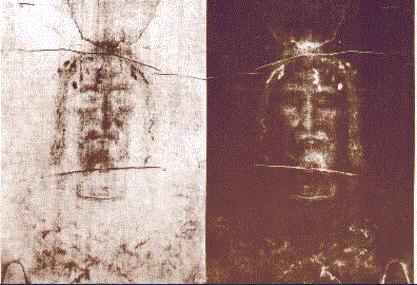
The BBC has a news article (here, written by Bethany Bell) about a burial shroud which was found in a tomb in Jerusalem and dates to the time of Christ. They state that it is the “first time” that such a shroud has been found. The new discovery is naturally compared to the Turin Shroud which many believe was Jesus’ burial cloth.

The recent discovery is different from the Shroud of Turin in that it is a simple two-way weave while the Turin cloth was a complicated weave.

I have no idea whether the Shroud of Turin is genuine or not. I know that there are many who would die for the belief that it is the real thing, showing us what Jesus actually looked like. Meanwhile others claim to have all the evidence that it is a fraud.


The Shroud of Turin

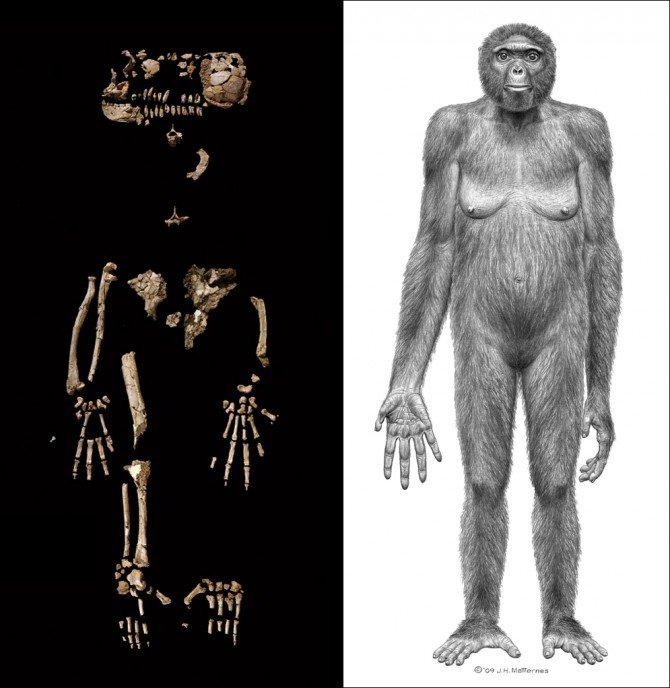
What truly amazes me is the arrogance that demonstrates itself through the researchers when they describe the importance of this find. This really is nothing new. After all, one can find the same type of conclusions drawn from archaeological finds regarding the origin of species. One skull is found, or maybe even just a jawbone and the timeline for a whole species is defined.


Human Evolution: Filling in the Blanks

The conclusions drawn from this discovery seem almost as grand. In the BBC article, Bethany Bell states:

"The researchers believe that the fragments are typical of the burial cloths used at the time of Jesus.

As a result, they conclude that the Turin Shroud did not originate from 1st Century Jerusalem."

This, we are told, is the “first time” pieces of a burial shroud have been found from the time of Jesus. That would make this the only burial shroud ever found from that time (except for maybe the Turin cloth). Yet this one discovery is sufficient evidence for the researchers to conclude that this burial cloth was typical for those used at the time and subsequently to decide that the Turin Shroud was a fake. This strikes me either as incredible arrogance, or great faith! You either know what all the other clothes were like at the time (based on one find?), or you have a firm belief that they were all the same. But are we not told time and again that faith has no place in science?

What is it about science that makes people lose all humility, that makes people believe they have all the answers – to everything? In the modern era many believed that technology would solve all the world’s problems. We would live to a ripe old age, free of war, poverty, famine, and disease. Then the world wars hit Europe and many changed their minds.

But still many scientists believe they can know everything, even if their conclusions are drawn from just one cloth or one bone fragment. I firmly believe in the pursuit of knowledge. But knowledge without humility is arrogance. Few seem to agree with the well known quote, “The more I know, the more I know I don’t know.”

It isn’t only the scientists who virtually worship knowledge and technology. In a recent BBC interview concerning global warming a specialist from India was asked whether we need to be concerned about climate change. He didn’t really think it was a problem as he was convinced that future technology would be able to fix all of today’s mistakes.

Some people choose to look to science for all the answers to life, refusing to acknowledge that faith plays any role in their decisions. Others choose to make God part of their lives, thereby acknowledging that faith plays a role in life.

The BBC report about the burial cloth states another interesting bit of information. The researchers believe the man in the grave had leprosy. That would have made him the earliest proven case of leprosy. They also believe that he was a member of the aristocracy or was a high priest.

Wednesday, December 9, 2009

What to do about bribery?

We are in the process of amalgamating our plots of land into one. The purpose of this exercise is to save some money on government taxes. The process itself should really not take all that long – or so we were told. But so far we’ve been working on it for almost a year! In that time it has also cost us a fair amount of money as each person involved in the process has had to be paid for their services: architects to show the original plot measurements, government offices to confirm that we are indeed a learning institution, amongst other things.

Now we are almost there. Approval has been given and everything is sorted – almost. All we need now is for the Lands Office in Nairobi to change the original title deeds to reflect the fact that the centre lies on just one plot of land.

That is when we received the phone message from the architect who is managing the process for us:


A special request

The text message we received stated:


“I passed at survey of kenya n we need some money for the same.registration amendments verification fees.all amounts 20000.but arrage for 4000o. to help us in quick execution of work. Thankyou.bye.”

The question is, what should we do? If we pay what is asked we won’t have to wait another year to finally get this matter sorted out. Supposedly. But on the other hand, as a Christian organisation, we don’t believe in bribery.

What is to be done? What would you do?

Tuesday, December 8, 2009

Water and Health Issues in Naivasha Town

The lack of a proper water delivery system is a real problem in Naivasha. It’s hard to believe that a town sitting beside a lake would have so many problems with a lack of water. It is even harder to believe when you realise that farmers way up on the mountains around Naivasha used to have enough water. In Eburru, the mountain on the north side of the lake, there are giant water tanks which used to provide the whole community.

Many people in Naivasha town have to rely on the water sellers. The municipality pumps water from their large bore hole each day but the supply is divided between the various parts of town. As a result we get water on Monday and Friday while others get it on other days of the week. When you build your place you are required to put in your own water pipes. The water company then connects your pipe to their main supply line.

Many homes and businesses do not have the luxury of having their own pipes or a water storage cistern. For this reason they rely on the “water boys” for their daily supply. There are a few bore holes scattered about town where people go to buy the water. For those who require more or are able to afford it, they buy a tank load which is brought by a tractor. But most people just buy their water from the donkey drivers.


Water being delivered by donkey

It is not uncommon to see donkeys pulling carts over laden with water barrels, being beaten relentlessly with a whip to encourage them to move faster under their heavy load. Many donkeys often have open wounds and are covered in scars due to the harsh treatment they endure. The RSPCA has an education campaign to encourage better treatment of animals, but that seems to be having little impact.

This week the health minister in town decided that the donkeys were a health threat in the community. He has subsequently banned the transport of water by this means. This has left most with few alternatives. Water delivered by the municipality either does not exist or it is provided too infrequently. Water delivered by tractor is just too expensive. The result has been a water shortage in town. Homes and businesses have subsequently run dry.

How much can people take before they cry “enough”? It is one thing to ban something and force people to use alternatives. But what happens when there are no other alternatives, or when the alternatives are priced beyond the means of the common person? Clean and sufficient water should be a human right. But here in Naivasha, on the shores of a drying lake, that does not seem to be the case.

The word on the street is that the water donkeys have been banned to stop the spread of typhoid. The disease – together with malaria – apparently occurs in epidemic proportions in the community. Whenever someone is ill and goes to the district hospital, nine times out of ten they are told that they have malaria. And if it isn’t malaria you can be sure that it will be typhoid. Sometimes they are told they even have both.


Entrance to the District Hospital

Fever? Must be Malaria. Or maybe Typhoid.

A while back a participant at a conference being run at the centre suddenly started feeling unwell. The local hospital told her that she had typhoid. All our water is boiled and filtered. If she ended up with typhoid then she would have brought it with her. But we thought that her symptoms made the flu a much more likely diagnosis.

Then a second participant started feeling unwell. The local hospital diagnosed him too with typhoid.

When the third participant was told she had typhoid, she refused to accept the diagnosis and did not take the medicine. She struggled through and then went to see her doctor in Nairobi. The diagnosis there? The flu.

We have seen so many people wrongly diagnosed. Either malaria or typhoid, those are the two options. The local health authority even asked us why we were not treating our daughter for malaria when she had a fever. But we refused to go with the consensus.

We know of people who have even died here in Naivasha as a result of being wrongly treated for malaria or typhoid. There was a young girl a while back who was not only wrongly diagnosed but then overdosed on the wrong medication. We had hoped her death would lead to reform. But it was not to be.

Another tragic incident happened last month to one of the employees at the centre. His daughter suddenly became unwell. The local hospital diagnosed his five year old child with malaria. When she didn’t get better he became concerned and discharged her from hospital, took her on a matatu (local taxi) and brought her to a hospital in Nakuru. They found that she didn’t have malaria, but meningitis. Sadly, by that time the damage had been done. Now, though she is alive, she can no longer use her arms and legs properly. She is now disabled due to the wrong diagnosis and treatment being given at the local hospital.

Monday, December 7, 2009

The Naivasha Postal System

In the olden days (talk about dating yourself!) the post was very unreliable. If there was any suggestion that money might be in a letter or something valuable in a parcel, they would just disappear. We estimated that about half of our post never arrived, not because we received so much money in letters, but because people probably thought that we did.

I knew of one young man, in the days before email, who was in a long distance relationship. The two would routinely write their letters in triplicate just so that at least one would get through. They always received at least one of the letters, sometimes two, but rarely all three.

But that was then. Today the postal system has become much more reliable. We don’t often have many parcels disappear, some, but not all that many. More commonly we have received packages or envelopes which have been torn open when someone wanted to see what was inside worth stealing.

Take for example the parcel we just received. When the postal worker ripped it open to look inside he/she found some nicely wrapped presents. There is no way of knowing if any of the contents were stolen, but one of the presents was then torn open.

Usually when this happens today they stick the damaged post into a plastic bag with an apology: sorry, envelop was damaged in transit. This time they just put some tape over the opening to try and hold things together a bit.


Pilfering fingers couldn’t resist
Opened parcel with torn open contents

We sometimes receive an envelope onto which the sender wrote the message “No money enclosed.” I don’t know if that helps, but I’m sure it didn’t help that someone had written on this particular parcel “Your Christmas stockings.” Clearly that was too much temptation for someone.

The problem with this sort of thing is that you just don’t have any recourse. There is nobody worth complaining to who will actually try to do something about it, to stop it happening in future! And that makes these experiences doubly frustrating.

Wednesday, December 2, 2009

Security in Naivasha

There was an article in the news that the police had shot five gangsters in Naivasha on Monday night. A tip-off had warned that the group was planning a robbery in Naivasha. They were shot and killed by the police when they refused to stop. “Suspected gangsters,” is how the media has labelled them. You would hope there is more than suspicion on the side of the police if they are willing to shoot to kill.

Following the incident, the Naivasha OCPD, Joseck Nasio, warned criminals that their days were numbered since the police had increased security leading up to the holiday season. "We will not allow [the gangsters] to take advantage of the festive season to rob innocent wananchi [people] and cause them unnecessary anguish", he said.


Armed and Ready

I do hope this is not just an empty threat. We’ve heard from a number of people how the security situation in and around Naivasha has deteriorated. In our neighbourhood alone there have been a number of robberies last month. Many of our neighbours were affected. A gang has been going around and stealing all the tyres off of vehicles. This has happened to at least eight of our neighbours. We are grateful that they have not come to the centre. A few times the car alarm has gone off in the middle of the night, throwing us out of bed. But fortunately these have all been false alarms.

Some of our workers have not been so lucky. Last week one of them had his door broken down at two in the morning. Thieves came in and stole his bicycle, amongst other things. He lives in Karagita which is an estate on South Lake Road. He now has quite a long walk to work every morning.

I asked him whether the neighbours had come to his aid. In years gone by people used to support one another, often rushing out with machetes if someone cried out for help. But today so many of the bad lot carry guns. What good will machetes do against a gun? So better to stay safe and come out once the thieves have gone.

Another worker was assailed just as it was getting dark. The attackers tried to pull her into the bushes. “Cut her! Cut her!” the one yelled at his colleague when she cried for help. Fortunately she was able to escape. Her cries went unheeded even though many people had yet to return home and lock their doors for fear of the night. Apparently it isn’t uncommon to hear a woman screaming in the village at night. Most people attribute it to a man disciplining his woman for whatever reason so these calls are mostly ignored.

We have heard from others that the security situation, particularly in Karagita, has really deteriorated as of late. There are gangs who go from house to house each night and rob the people from what little they have. Many of the people living in the village work in the nearby flower farms. With the lake level going lower and lower, more and more people are losing their jobs. This, together with the upcoming festive season, contributes to the increase in insecurity.

Thursday, November 12, 2009

Fearing 2012

2012 is when Kenya will be holding the next elections. Although there are still about three years to go, that has not stopped the wrangling for power amongst the MPs. Numerous individuals have already come forward declaring their intent to run for the top office in the country. The news media carry repeated stories about the threat of violence we face with the next elections.

According to the BBC (http://news.bbc.co.uk/2/hi/africa/8293745.stm) various tribes are preparing themselves for battle in 2012. Last time they fought with machetes and bows and arrows. This time they are looking for guns. One arms dealer claims to be selling more than 100 rifles a month. The article quotes one Kalengin man as saying, “Before we were using bows and arrows to fight the enemy but ... compared to guns, the arrows were child’s play.”

When you talk to the people who were directly impacted by the violence, people who had family members beaten, raped and killed, who had their land and property either stolen or destroyed, you recognise that they too feel as though they have been forgotten. They too feel that justice has not been done. How can the country forget the violence of the last election and move on when hundreds if not thousands of people are still living in tents throughout the country because they fear for their lives if they returned to their old homes?

One of these “tent villages” lies outside the neighbouring town of Gilgil. The former refugees managed to scrape together some money to buy land to set up the tents which the Red Cross had given them. But every time there is a large rain their land turns into a lake. How can such a community forget what was done to them? How can they not feel resentful when the leaders of the country resist local and international pressure to bring the perpetrators of the post-election violence to justice?

Many in Kenya speak with fear of 2012. Healing in the pursuit of justice has not happened. This leaves the threat of violence hanging over the country. In light of this, what possibly can cinema goers think when they see the posters advertising the up and coming movie, ‘2012?’


2012 – We were warned.

Is violence inevitable? Or is there something which can be done to prevent it? We may not be a very large organisation, but we are doing what we can in Naivasha to fight against the flood of evil. Sometimes our efforts seem almost futile. But sitting back and doing nothing, waiting for the inevitable, is clearly not an option either. For this reason we invited an organisation dedicated to reconciliation called “Le Rucher,” to come and do some reconciliation workshops here at the centre. The moderators were people who spoke from experience, from countries which had witnessed unspeakable acts of violence such as Rwanda and DR Congo.

We have been amazed to see how people’s lives have been changed and the healing which took place in these meetings. How can it be humanly possible to forgive those who killed your husband, raped your child, stole your cattle, burned your house? And yet we have witnessed such healings in the participants. Initially people arrived refusing to even talk to members of the other tribes. But by the end they were laughing, hugging, and singing and dancing together.

When we witnessed this change, we couldn’t help but be amazed. How was this possible? Surely only God is able to bring someone to the point where they can forgive, be healed, and then be reconciled after experiencing personally the evil that humans are capable of perpetrating against one another. It isn’t philosophical or scientific evidence for the existence of God, but there was just no other way for me to explain the changes that we saw in people’s lives. The change was not due to the excitement of the occasion or a rush of adrenaline. That was clear as what they experienced continued to have an impact on people’s lives once they returned to their homes.


Giving up the pain

Some of the later conferences were intended for training purposes. Those who had participated in the initial events returned to learn how they could teach and run these courses in their own home towns and villages. In these training sessions the candidates shared how lives were changed and how the message is now also having an impact in their home communities. Through their own personal healing and through the sessions they have attended, they have learned how to apply the teachings to take on the healing and reconciliation to others.


Reconciliation Celebrations

Maybe these are the kinds of people who can make a small dent against the threat of violence we face in 2012. With God’s help we can maybe avoid yet another round of hatred and destruction in this place.